Why the Memory Supercycle Won’t Die by 2030 (And the One Japanese Company That Could Crash It)
Everyone’s talking about the AI hype and how the Big 3 (Samsung, SK Hynix, Micron) are printing money. But if you’re just looking at quarterly earnings, you’re missing the actual “black magic” happening behind the scenes. The Memory Supercycle 2030 is no longer just a theory; it is a structural shift in the semiconductor industry driven by HBM4.
We’re moving into a weird structural shortage that defies basic economics. Usually, when a new tech comes out, the old stuff gets cheaper, right? Not this time. Here’s why we’re looking at a DRAM Shortage that could last until 2030, and the “Achilles’ heel” you need to watch.
1. HBM4 and the Engineering Behind Memory Supercycle 2030: Why “New” doesn’t mean “Cheaper”
In a normal world, iPhone 16 makes the iPhone 15 cheaper. But in the semiconductor world, HBM4 is literally eating its ancestors.
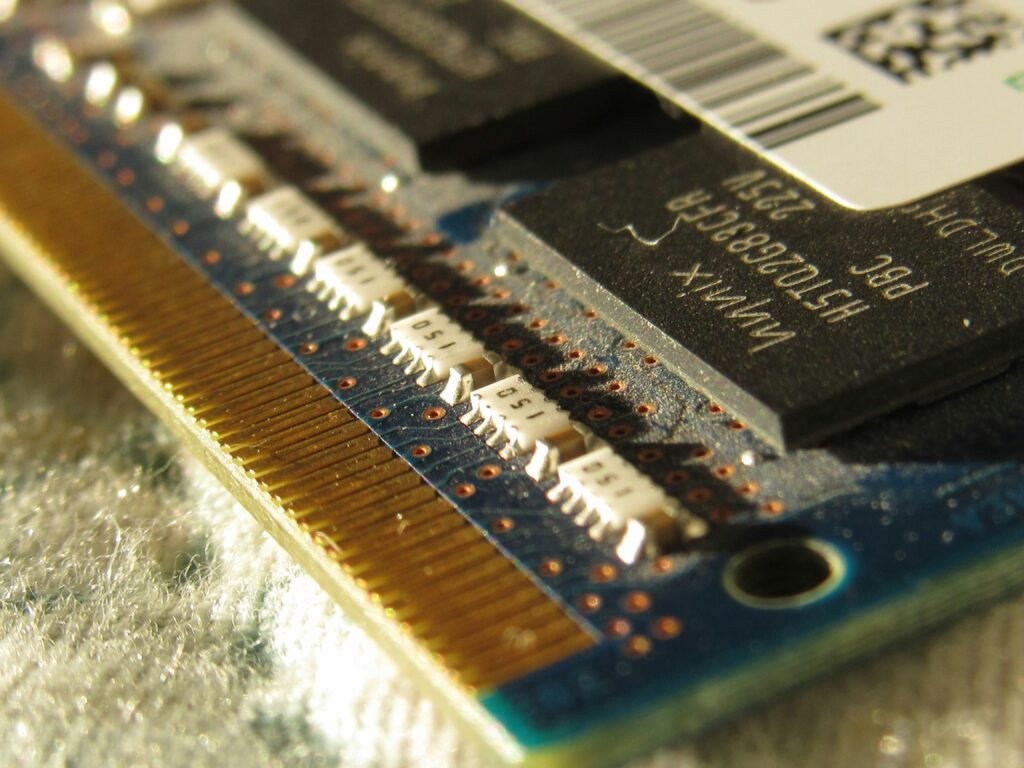
Think about it: To make one single HBM4 16-stack chip, you have to shave down and stack 16 individual DRAM chips. From a manufacturer’s perspective, they just “deleted” 16 units of DRAM supply from the market to sell one high-end AI chip.
Then you’ve got SO-DIMM (LPCAMM2) hitting the scene. One module can gobble up to 64 DRAM chips. Every time a “next-gen” product drops, it nukes the supply of “old-gen” DRAM by 16x or 64x. This is why the Big 3 are acting like they have a “limitless spring.” They don’t even need to collude to keep prices high; the tech itself is doing the supply cutting for them. Big Tech is crying right now because they’re forced into 5-year long-term contracts just to secure crumbs.
2. The Red Flag: Shin-Etsu Chemical & the Middle East
If there’s one thing that keeps me up at night, it’s not Nvidia’s valuation—it’s Shin-Etsu Chemical. These guys in Japan basically own the market for Photoresist and wafers. Without them, the Big 3 are just expensive brick factories.
The problem? The raw material for photoresist is Naphtha, and with the Middle East looking like a powder keg, that supply chain is fragile. If Shin-Etsu goes down, the whole AI party stops.
If you’re a short-term trader, you need to watch the headlines coming out of the Middle East like a hawk. Even if Korean domestic chemical companies try to step in, the “Qual Test” (quality certification) takes at least 6 months. You can’t just swap suppliers overnight in a fab.
3. The Long Game: Buying the Blood in the Streets
Now, if you’re a long-term investor, a Shin-Etsu supply shock is actually your “Golden Ticket.”
Why? Because a supply chain bottleneck doesn’t kill the demand; it just delays it and makes the eventual product even more expensive. If the stocks tank because of a temporary supply issue in Japan or the Middle East, that’s not a fundamental failure—it’s a fire sale.
The structural shortage isn’t going away. By the time the supply chain stabilizes, the HBM4 and SO-DIMM “black hole” will have sucked up even more DRAM supply, sending prices to the moon.
We aren’t in a normal bubble. We are in a Physical Supply Erasure phase.
HBM4 & SO-DIMM are destroying supply faster than we can build factories.
Shin-Etsu is the single point of failure you must track for risk management.
2030 is the target. Any dip caused by “logistics” or “raw materials” is a gift.
While the Big 3 are currently shifting focus back to legacy DRAM to capture immediate profits, don’t let the short-term headlines distract you. The fundamental shift toward HBM4 architecture means that the “physical supply erasure” is a one-way street. As we approach 2027 and 2028, the bottleneck will only tighten, making current price levels look like a bargain in hindsight.
Stay sharp. The Big 3 hold all the cards, and the “limitless spring” is just starting to flow.